Can You Put Hot Cocoa in Crepe Batter?
Yes. At Crepe & Custard in Lake Junaluska, North Carolina, we add hot cocoa mix directly to our crepe batter instead of using straight cocoa powder. The technique produces a chocolate crepe that stays thin and light rather than turning dense or cakey. The sugar in the mix helps the crepe brown evenly on the griddle, and the milk solids add a subtle creaminess that cocoa powder alone does not provide.
Why Hot Cocoa Mix Instead of Cocoa Powder?
Cocoa powder adds richness, but too much of it weighs a crepe down. Hot cocoa mix solves that problem because it contains sugar and milk solids alongside the cocoa. Those additional ingredients do two things: the sugar promotes better browning on the griddle surface, and the milk solids contribute body without adding density. The finished crepe tastes fully chocolate but holds together the way a traditional crepe should.
We have tested multiple brands and formulations over the years. Mixes with too much sugar cause the crepes to brown too fast. Mixes without enough cocoa solids produce weak chocolate flavor. The version we settled on balances intensity with restraint, giving us a crepe that tastes right and cooks consistently throughout the day.
How Crepe & Custard Makes Chocolate Crepes
We make our chocolate crepes fresh to order at our Lake Junaluska cafe. The batter rests after mixing to let the flour hydrate properly before we ladle it onto a flat griddle. You can smell the chocolate before the crepe finishes cooking. That smell carries out to the walkway along the lake and tends to pull people in before they have read the menu.
What Goes Well with a Chocolate Crepe?
A chocolate crepe base pairs well with fillings that either contrast or complement the cocoa flavor.
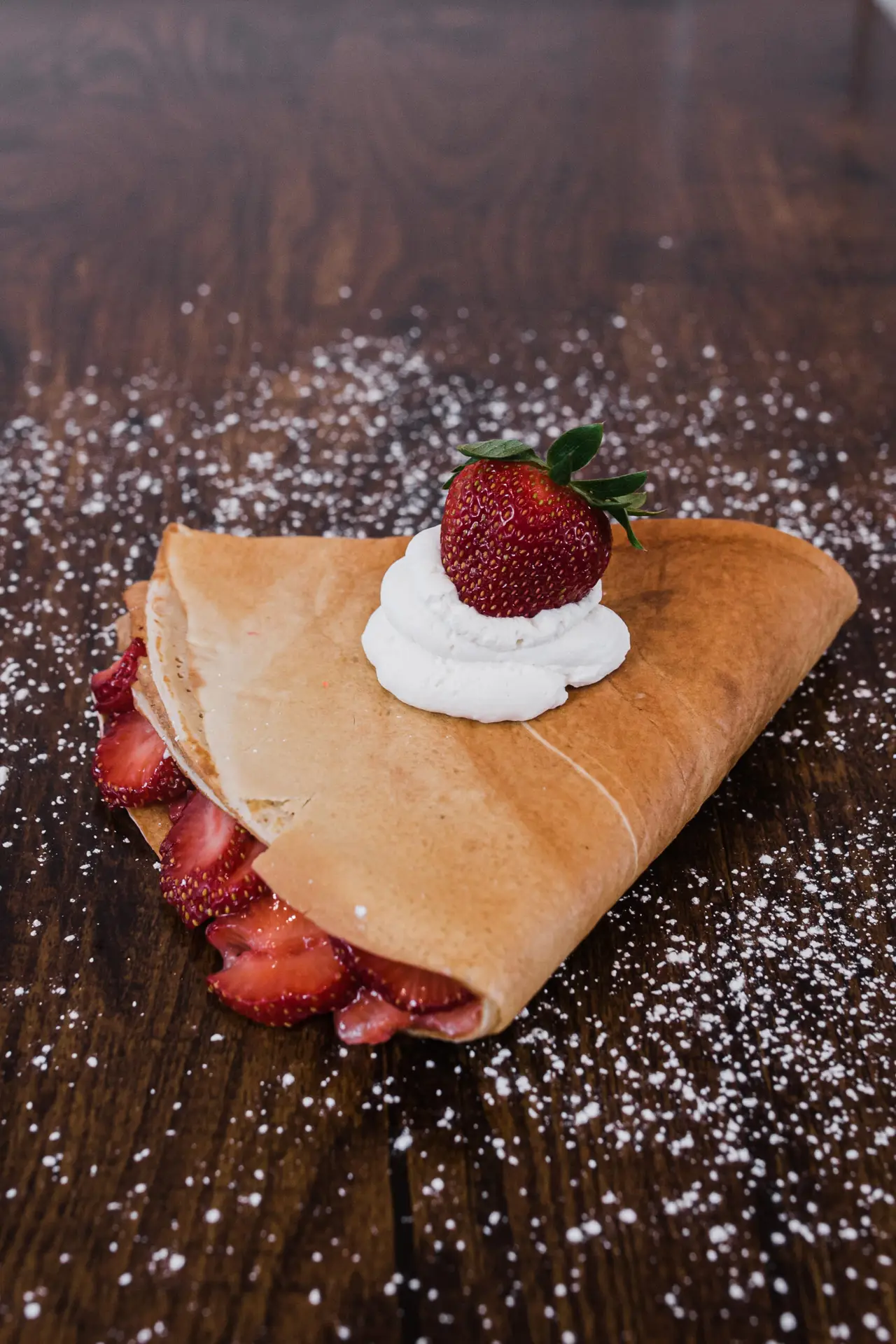
Strawberries and whipped cream are the most popular pairing. The acidity from the fruit cuts through the chocolate and keeps each bite from feeling too rich.
Banana and Nutella leans into the indulgence. The banana adds sweetness and texture while the Nutella doubles down on the chocolate and hazelnut combination.
Powdered sugar and butter is the simplest option and the best way to taste the chocolate crepe itself without competing flavors.
How to Make Hot Cocoa Crepes at Home
The technique transfers well to a home kitchen. Start with a standard crepe batter recipe and replace a portion of the milk with prepared hot cocoa. A ratio of one part hot cocoa to three parts milk is a reasonable starting point. Adjust based on what the first few crepes tell you. Too much liquid makes the batter thin and hard to control. Too little produces something closer to a pancake than a crepe.
Two things to watch for when cooking. First, the sugar content in the mix means chocolate crepes brown faster than plain ones. Keep your pan or griddle at medium heat rather than medium-high so you have time to spread the batter thin before it sets. Second, chocolate crepes tear more easily than plain versions. Give them an extra few seconds before flipping, and use a thin spatula.
Where to Try Hot Cocoa Crepes in Western North Carolina
Crepe & Custard is at 55 Memory Lane, Lake Junaluska, NC 28745. We make chocolate crepes to order throughout the day. The cafe sits on the Lake Junaluska Walking Trail with covered porch seating that faces the water. Gluten-free crepes are available across the full menu.